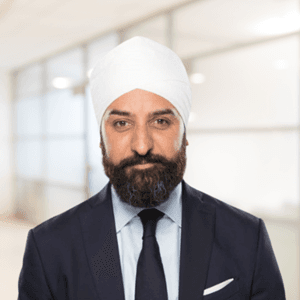
Acquisitions, a Sound Step
Adding to its growing portfolio of contributions to Saudi Arabia's Vision 2030, Omrania was awarded a US$113.6 million design contract by Diriyah Company for the Boulevard District. Speaking about Egis' acquisition of Omrania, Sagoo says that it was able to land a deal for the Diriyah district because Egis had a proper leadership team, including an MD, Finance, HR, and engineering team based in Saudi Arabia.
"We share resources across the region, but we have a solid team that was plugged in. We didn't have to fly resources in and out all the time and did not centralize delivery out of the UAE," he explains.
"Omrania has brought architecture and engineering as a combined offering in that design space. So, while we have a very strong PMC offering, it was good to have that other piece of the jigsaw as well. It brought local credibility to the table," says Sagoo
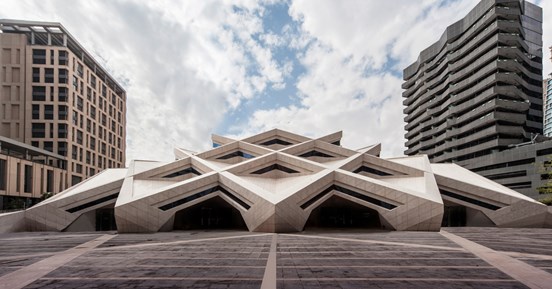
Omrania, part of the 10N Collective, Egis Group's architecture line, designed the King Abdulla Financial District Grand Mosque as a spiritual landmark shaped by desert rose geometry and parametric thinking.
He says he sees many visionary ideas in Saudi Arabia but that eventually these have to be turned tangibly into delivery. The acquisition of Omrania was so timely because it was time to see the vision and ideas filter down into this project, according to Sagoo.
Even though being awarded the Diriyah Project was a great achievement, Sagoo comments, "We are not going to eat that cake in one go, and I don't think Saudi Arabia will do that either. They will go through concept. We'll go through pocketing pieces off, and some pieces will work for the development and other pieces will be remodeled and reshaped; it's all about adapting each project to the very best it can be."
While discussing acquisitions, Sagoo says there is only one rule: you have to recognize your goal and how to get there. "Traditionally, when working with multiple acquired companies, the culture changes dynamically," he outlines.
He adds, "I get that PMC teams are culturally different to design teams, and within design teams, engineering design teams are different to architecture teams. I've worked with enough different practices to know that not one architecture team is the same as another. I often get asked, 'How do you manage all the cultures and how does everyone align?' I'm not really sure you have to have a single culture.
He continues, "We live in the UAE, and if there's anything we've learned, it's that you can have differences, you can have different cultures, you can have different ways, and it can work harmoniously. You have to allow the river to flow."
"I have teams working across different parts of our business, and they'll operate at different paces or in different ways. You have to look at things through their lens, and sometimes you have to allow people who are running a bit faster to run. If you have people that want to ponder and reconcile and go back into their thoughts, you have to allow that to happen too"
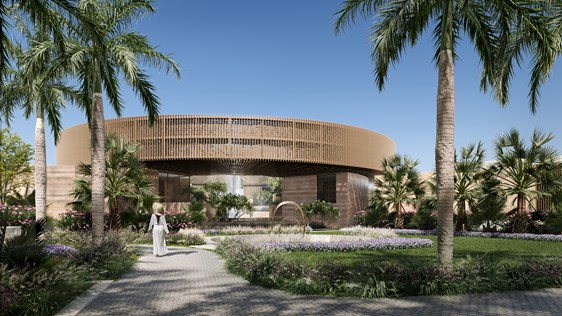
Designed by U+A, part of the 10N Collective, Egis Group architecture line, the Four Seasons Resort and residences at AMAALA is a masterplan rooted in wellness and environmental harmony.
Sagoo explains that fluidity is important in business because rigidity may cause people to look for other companies or options where they feel more comfortable. He highlights, "We have to create a common goal, and then you have to allow a bit of fluidity to get there. Otherwise, people will go and find the culture that they want and what works for them. It happens in acquisitions; people come in, and they get unstable and nervous and might say, 'This isn't for me.'"
"Moreover, our leadership has to pivot. What it takes to be in a 200-500 person business is very different to what it takes to navigate a staff of 4,000 in your businesses. We have to recognize human nature, where people feel comfortable, and that's where you'll get the best output too," he points out.
Artificial Intelligence, Future Technologies and Its Challenges
Artificial intelligence (AI) is changing how companies like Egis work. It helps them design smarter buildings, improve transport systems, and make better decisions using data. AI also supports safety, efficiency, and sustainability, allowing companies to solve complex problems faster and create solutions for modern cities and infrastructure.
Sagoo says everybody is talking about AI, but he feels it is more important to know how to humanise the AI experience. "I have seen change. I remember in my first job when we got our first computer in the office, and we all wanted to share that one computer. If you wanted to send an email, there was one address for the entire team. No one had mobile phones either, so if somebody called the office phone and said you've got a site meeting, that's how we'd know we had to go there. From there to where we are today, and how we use technology has been an organic and human journey"
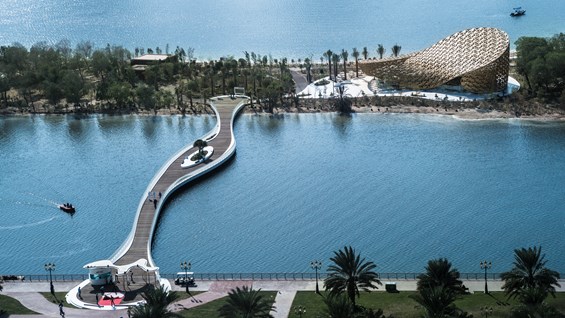
Egis provided design and build services for the construction of major features in the development of Noor Island in Sharjah, which is an urban development designed to combine nature, art, and tourism.
He thinks there is a big danger in adopting AI without fully understanding what it brings to the table, however. "There are a couple of things that have stood out to me. We need to be careful that AI doesn't replace the basic tasks to the point that we cannot use them to train new graduates on the principles of engineering or architecture. It has to be part of, not instead of.
He explains that AI is only as good as what you put into it, noting this is why we still need human interaction. "AI should be a tool you have in your pocket like a mobile phone, and we need to learn how to use it, not as a shortcut, but to add value. You have to shift your thinking from it being a shortcut—and thinking that it replaces people—to what it can offer and mean for the people in the industry. If you use it as a value add, then it can become powerful."
"I have seen it used effectively and appropriately. For example, I have seen graduates take a wind model, put information into it, and show me the results on their mobile phones. Making simple changes to the building in real time and the impact it has on the wind model. Can you imagine doing this back in the day? That should be how you use AI," Sagoo cautions.
Drivers in the Mena Region
Discussing the MENA region in terms of growth and future opportunities, Sagoo says there is still a lot of potential.
"Looking at the Middle East and Africa region specifically, you see the most potential in the next 1- to 3-year years. There is no secret about COVID-shifting thinking about centralizing where the center of the world is, and we're not called the Middle East for no reason; we're perfectly located."
"I genuinely think that because of geopolitics and because of where we are, in spite of the challenges that we have in the region, there are some great places to be. There are some great hubs, and I think they're becoming tangible. We know it because whether you're in Riyadh or whether in you're in the UAE, you sit in traffic. You see traffic because it's a consequence of the attractiveness of where we are,” he explains.
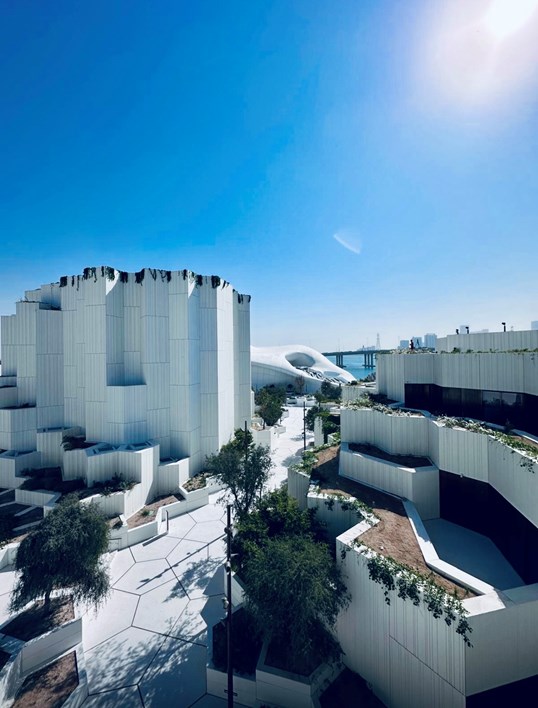
Egis served as Lead Design Consultant and Construction Supervisor for the Natural History Museum in Abu Dhabi. The multidisciplinary scope brought together architecture, exhibition design, structures, MEP, marine works, and on-site supervision to realize a technically complex cultural landmark.
Sagoo thinks the next big thing for the firm is going to be infrastructure and systems that deliver basic needs of a growing polulation. “It's going to be infrastructure projects, data centres, sewage, potable water, and other things we use daily. Whether we like it or not, water is going to become a bigger scarcity because of the growing population in the region.” “We will need greater transportation networks to move people around. It's not going to be an option anymore. It’s all about people, movement and goods,” he says.
He notes that if people start looking at solid infrastructure, then the assets that sit on that infrastructure is enough to keep everyone focused.
Along with designing the infrastructure, it has also become important to look at climate change, he warns. It has become crucial to have strong ESG in all projects, and this is something Egis has focussed on for a long time, he highlights.
“We have to do an ESG assessment of every one of our opportunities that goes out the door now. It's absolutely necessary for any project we want to want to work on. We also work closely with our clients on this journey also, working together to achieve a better environmental outcome.”
“It doesn’t mean that we are their only source, however, most of our clients are astute - they engage globlly and they know what good looks like and how it is measured,” says Sagoo.
“Overall, the region is proactive and positively reactive. In the region authorities recognise problems and plan and before you know it, you’re building it. We don't have to go through the arduous process of planning and public inquiries, so we can pivot quickly into what's needed and I think that's a tangible asset that we have in the region.”
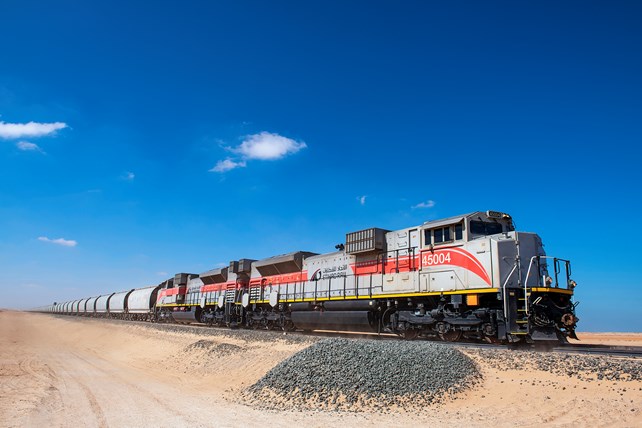
For Etihad Rail, Egis acted as project management consultant for their national network expansion, supporting the development of Stages 2 and 3. Its role included assisting Etihad Rail and supervising the work of design and delivery partners on a central project to regional connectivity and freight growth.
Talent retention
Looking ahead, Egis says it is well prepared for the future and it remains focused on one key objective - holding onto good people.
“Getting the best and retaining the best is our staying point. It's not only about some of the projects we will win. For us, it's about who the best people are. An organisation has to be made of great people, even if those people have different outlooks, and that’s the game-changer,” explains Sagoo.
“There are people that are ambitious and it is important to create a growth path for them. However, an organisation isn't just made up of 4,000 ambitious people. An organisation is made up of people that want to grow, some that want to come and deliver great work and go home. We have to create an environment for all,” says Sagoo.
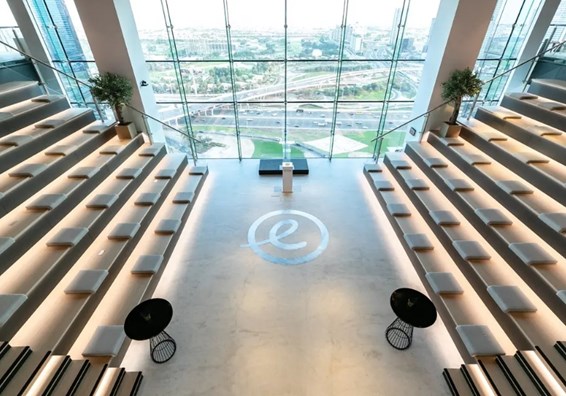
The opening of Egis' new UAE central office in Dubai Marina. The teams became one, consolidating six offices, including Inhabit and 10 Design, into one purpose-built hub.
Speaking about the recent geopolitical tensions, Sagoo says, “As part of the leadership team, as with many of our peers, we have been leaning in to try and understand what this means for our business, our people and our clients, trying to unpick reality from the noise and predict what a new norm will look like.”
“That said, first and foremost has been the safety of our people, our clients and our partners. This goes beyond the most obvious safety issues we are facing, debris from interceptions etc. We also recognise that the conflict impacts each and everyone differently, irrespective of grade, role or seniority, it is impacting our families here and back in our home countries and that brings a very different type of pastoral care that is needed,” he explains.
“We also recognise that each GCC country has a different set of challenges and is being engaged differently by the conflict. As such, we cannot adopt a 'one size fits all' philosophy. If agility and quick decision making was one thing that the Middle East region has taught us, then it is now these skills are being deployed.”
Egis has put in place a number of measures to tackle the situation, and Sagoo explains that while the threat is the same, it affects people differently.
“Managing design teams is different from managing supervision teams, or operation and maintenance teams, as such we have to remain flexible and adopt an approach depending on the risk exposure and needs of each team. The nature of the beast is such that many of our people are playing a critical role in maintaining our infrastructure, and that means their levels of exposure are higher. This requires our leadership to lean in more, be visible and be accessible. We are maintaining strict adherence to health and safety protocols and pray for the well-being and safety of all.”
“This too shall pass, we will have learnt new skills and thinking on this journey. Until then, our construction community remains tight, supportive and collaborative. I have enjoyed seeing how quickly we have regrouped and supported each other’s efforts. A true testament to the collaborators of our region,” confirms Sagoo.
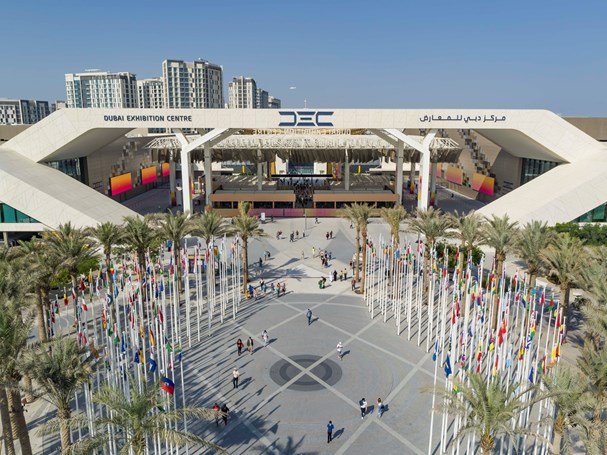
Egis has entered phase 2 of helping deliver the expansion of Expo City's exhibition venue. It's role covers multi-disciplinary engineering, architectural, sustainability, value engineering, regulatory compliance, and BIM integration.
In conclusion Sagoo says, “The industry is small and I love what Egis is doing, and I look around and I like what our industry is doing, and I love what our peers are doing as well. We partner with our peers, and I never call them competitors because we stay in the same room together, and we work with the same things.”
“We're not scared of sharing ideas, we're not scared of thinking ‘oh, you know what, AI is my secret tool, and I dare not speak about it with anybody, because otherwise I'll give away all my ideas,” he says.
“It’s no longer that people have the mindset of coming to the Middle East for 3-years before heading back home. This is home for many people. That's a real difference maker because we've got maturity in our industry now, and people have been here for quite a long time and they can tell some very different stories. I enjoy that with our industry,” concludes Sagoo.
*As published in Me Construction News – April 29, 2026