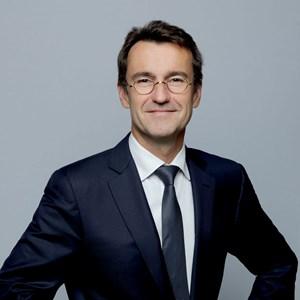
But I think climate change is definitely here. So we cannot anymore avoid integrating in the way we design the city, in the way we design each infrastructure that is a component of the city, how to take care about climate change. We need to change our hypothesis. We need to change our design in order to make those cities more sustainable.
Welcome to Engineering Matters. I’m Tim Sheahan,
And I’m Alex Conacher.
In a world where climate change is already happening, how can engineers and architects help deliver cities and national infrastructure that is fit for the future?
In this series of short episodes, we have partnered with Egis to explore sustainable approaches to the global built environment.
We’ll learn how Australia’s most flooded town is becoming more resilient, and how engineers and architects in the Middle East are including lifecycle carbon assessment right at the start of the design process.
We’ll discover how three projects in Paris are reducing the use of carbon-intensive materials, and how Toronto is building transport oriented communities that bring everyone closer together.
Thomas Salvant is chief executive officer for Egis’s Energy and Sustainable Cities business line.
TS : There are already solutions existing—whatever project we are talking about, wherever it is in each country—and we need to use those solutions more and more in every project in each country where we operate. And it's for example to have more and more solutions with low carbon emission materials in the way we design,. It is also the ability to design buildings that have a better optimization of the way they use energy. And also it's designing infrastructure across cities that is enabling to have, let's say, more fluidity in the way we use electricity, for example.
Buildings can be designed to limit energy use and reduce their operational carbon footprint. Old materials like stone and wood are being used in new ways, reducing the embodied emissions associated with the use of concrete.
TS :We know that some of the construction company might prefer to use concrete that any other material like timber or straw for example or mud . In France, we are building buildings with mud, straw as an alternative material, that is carbon-free or more carbon-free than the concrete is.
And we must think in new ways about older buildings.
TS : We are doing the carbon life calculation for each project
TS :And because we have developed tools to do those calculations very fast, we can do the calculation with a lot of scenarios again that help us to choose the best scenarios for the project, in order to comply to the regulation on one hand, but also in order to ensure that at the end it's a best scenario from carbon-free emission through the whole project life.
TS :The reuse, or the retrofit is most probably the key—one of the key—abilities for designing the sustainable cities in the future because more and more we will not be able to enlarge a city but we will have to rebuild the city on itself. And for that reason, we need to dedicate specific skills in order to decide what could be retrofit.
But as we reduce our reliance on fossil fuels, we will need sustainable and reliable sources of energy.
TS : Electricity will be a huge demand in the coming years, and that needs a very well-designed infrastructure— transmission and distribution infrastructure—in order to have less difficulty to produce the electricity wherever it is needed.
New grid infrastructure will support distributed electricity generation, on our rooftops and offshore. But we will also need new sources of baseline power.
TS : And talking about green energy, I know it's a debate, but nuclear is part of the green energy somehow.
TS : We need more and more to have nuclear SMR or traditional power plants built in order to sustain the more electricity, to come to the best electricity development we might have.
Large nuclear projects are often delivered late and over budget. We need to develop a more standardised approach.
TS : That's exactly what we're doing, for example, in England, with the two projects that are Hinkley Point and Sizewell. We are, with the client, working on the replicability of what has been done at Hinkley Point in order to accelerate the delivery of Sizewell.
Egis has developed secure collaborative tools that are now being used at both the experimental ITER fusion reactor in France, and in the construction of the UK’s newest gigawatt-scale nuclear plant, Hinkley Point.
These allow scientists, engineers, and contractors to avoid clashes and delays, before they happen.
TS : It's a long time now, that Egis are using BIM and digital twins, whatever sectors.
TS : We are developing digital initiatives in order to help the automation of our process.
The reason why we automate more and more the process of design is because as long as we have an automation process, we give our engineers more time to think about the key aspects of the design they need to focus on in order to produce the best project, to reach our clients' aims.
And tools like this are being used on projects across sectors, around the world.
From the very start, this innovation must be supported by a deep understanding.
TS : What goes with digital—and is very important—is the data because you can't do any good digital design without a very detailed, complete, reliable data set.
TS : And that's what we are helping our clients to achieve at the beginning of the process of design is to compute and gather the full data set in order to provide the most reliable design and to help the digital tools and capabilities that we have…
TS : …to produce the best calculation with that data set. And to improve and do all the calculation through various scenarios that are helping at the end to choose the best solution for the project.
Egis’s engineers and architects are using cutting edge digital tools to deliver a more sustainable future.
They are changing how we think about the design of cities and towns, of homes and offices.
They are even rethinking how stadiums can be built to ensure every fan has the best possible view of the game.
And from Toronto to Riyadh, they are delivering projects that really think about local conditions.
At the end of 2025 we spoke to eleven of these experts from around the world. Today, we are releasing eleven short episodes, focusing on their work.
Listen on to learn more about a truly sustainable future.