
The 8th Philippine Airport Modernisation and Expansion Summit provided a timely opportunity to reflect on the trajectory of one of Asia’s most dynamic aviation markets. As the Philippines continues to advance its mobility infrastructure towards global standards, the aviation sector is entering a pivotal phase of development. Across both major gateways and regional airports, momentum is strong — creating a clear opportunity to further strengthen capacity, accelerate digital transformation, and deepen collaboration across the ecosystem.
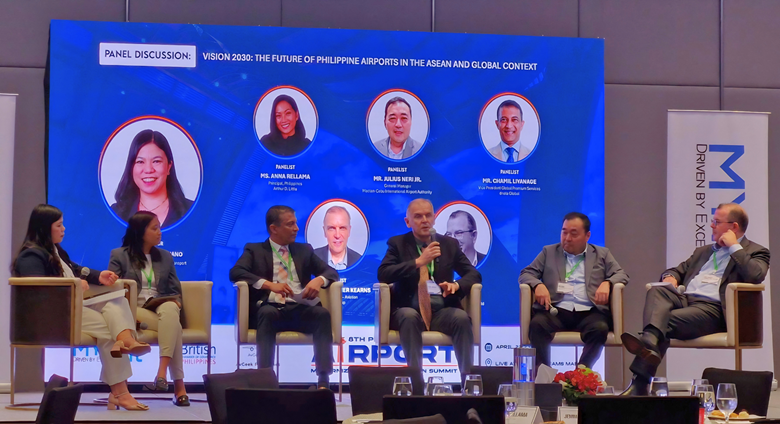
Positioning Philippine airports in ASEAN and beyond
Situated at a strategic geographic crossroads, Philippine airports are well placed to strengthen their role within ASEAN and the global aviation network. Key international gateways will continue to anchor long‑haul connectivity, while long‑term growth will increasingly depend on upgrading secondary airports to support tourism, regional economic development and inter‑island connectivity. Integrated master planning, particularly for multi‑airport systems and seamless intermodal links, will be essential to unlock this potential.
Capacity planning through 2030 and beyond
Forecasts indicate continued demand growth. The challenge lies not only in adding capacity, but in doing so efficiently and flexibly. Key priorities include optimising existing airside infrastructure, adopting modular terminal concepts that can scale with demand, and deploying passenger‑flow and operational technologies that enhance both the passenger experience and resilience.
Sustainability, safety, and smart technologies
Sustainability is now a fundamental design and operational principle. Energy‑efficient buildings, renewable energy integration, and readiness for sustainable aviation fuels offer the Philippines an opportunity to leapfrog traditional development models. At the same time, safety remains paramount. Advanced Communication, Navigation and Surveillance/Air Traffic Management (CNS/ATM) systems and surveillance solutions can deliver simultaneous gains in safety, capacity and operational performance.
Smart airport platforms that enable real‑time data sharing among operators, airlines and regulators will be a critical enabler of this transformation.
Investment, PPPs, and delivery frameworks
Significant investment is flowing into the sector, with delivery success remaining dependent on robust public‑private partnership (PPP) structures, transparent procurement and disciplined project governance. Experience from complex airport projects across Asia, Europe and the Middle East, as well as in the Philippines’ initial privatisations, demonstrates that early engagement of independent technical advisors, from feasibility through construction supervision, materially reduces delivery risk and improves long‑term outcomes. Egis’ experience across more than 100 airports globally reinforces the value of this approach.
From vision to delivery: experience in the Philippine context
This approach was reflected at Clark International Airport, an ambitious expansion programme was undertaken to increase capacity to 8 million passengers annually, including the delivery of a new 116,000‑square‑metre passenger terminal building. Developed as a public‑private partnership, the project illustrates how structured delivery frameworks and independent technical oversight can enhance outcomes.
Egis was appointed as independent consultant, providing impartial oversight for the comprehensive design‑and‑build and fitting-out contracts from initial design through construction completion, with a focus on quality, safety and operational readiness. Learn more about the project.

The path forward
The Philippines has a clear vision and strong market fundamentals. The coming years will test the industry’s ability to translate ambition into tangible, timely and sustainable outcomes that enhance connectivity, tourism and economic growth.
At Egis, we are proud to contribute through our expertise in airport master planning, terminal design, air traffic management, concept and feasibility studies and implementation support. We look forward to continued collaboration with all our clients to deliver next‑generation airports that are not only world‑class, but tailored to the unique geographic and operational context of the Philippines.
The future of Philippine aviation has the opportunity to be defined by those who combine bold vision with pragmatic, sustainable execution.
