
The 8th Philippine Airport Modernisation and Expansion Summit provided a timely moment to reflect on the trajectory of one of Asia’s fastest-evolving aviation markets. As the Philippines advances its ambition to elevate its airport infrastructure to global standards, the sector stands at a pivotal stage, where delivery discipline will be as critical as vision.
Across both primary gateways and regional airports, momentum is building. The next phase of development will depend on clear strategic prioritisation, effective use of technology, and strong collaboration across public and private stakeholders.
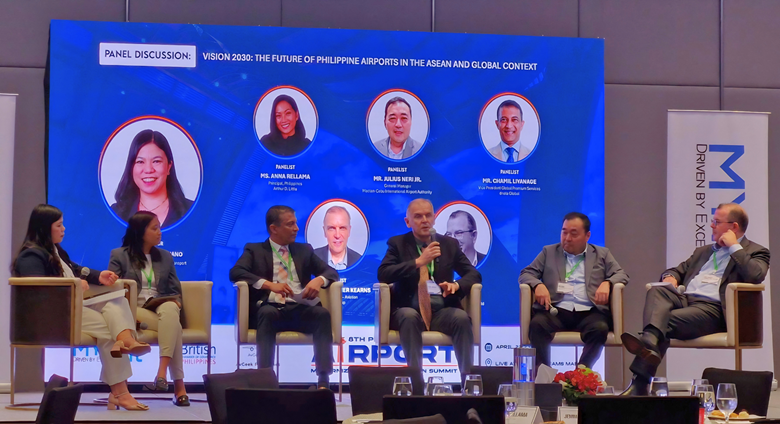
Strengthening the Philippines’ role in regional connectivity
Located at the heart of Southeast Asia, the Philippines is uniquely positioned to strengthen its integration within ASEAN and the global aviation network. While major international hubs will continue to anchor long-haul connectivity, the future of the network will increasingly rely on the development of secondary and regional airports.
Upgrading these airports is essential to support tourism growth, regional economic development, and improved inter-island mobility. Delivering this vision will require integrated master planning, particularly for multi-airport systems, as well as seamless intermodal connections that enhance accessibility and passenger experience.
Planning capacity for a growing market
Sustained air traffic growth is expected through 2030 and beyond. The challenge is not only to expand capacity, but to do so efficiently and adaptively. Key priorities include:
• Optimisation of existing airside infrastructure
• Modular and scalable terminal design
• Deployment of advanced passenger-flow and operational technologies
Together, these approaches enable airports to remain flexible, resilient, and aligned with evolving demand patterns.
Embedding sustainability, safety and digitalisation
Sustainability is now a central pillar of airport development. Energy-efficient design, integration of renewable energy, and readiness for sustainable aviation fuels offer the Philippines an opportunity to accelerate towards lower-carbon infrastructure models.
At the same time, safety and operational performance remain fundamental. Investments in advanced Communication, Navigation and Surveillance / Air Traffic Management (CNS/ATM) systems can simultaneously enhance capacity, safety, and efficiency.
The adoption of smart airport platforms, enabling real-time data sharing across operators, airlines, and regulators, will further strengthen operational resilience and passenger experience.
Investment, PPPs, and delivery frameworks
Significant investment is flowing into the sector, with delivery success remaining dependent on robust public‑private partnership (PPP) structures, transparent procurement and disciplined project governance. Experience from complex airport projects across Asia, Europe and the Middle East as well as already in the initial privatisations in the Philippines demonstrate that early engagement of independent technical advisors, from feasibility through construction supervision, materially reduces delivery risk and improves long‑term outcomes. Egis’ experience across more than 100 airports globally reinforces the value of this approach.
From strategy to implementation: the Clark International Airport example
This approach is exemplified by the expansion of Clark International Airport. The programme increased capacity to 8 million passengers annually, including the delivery of a new 116,000 m² terminal building under a PPP model.
Egis was appointed as Independent Consultant, providing impartial oversight across design, construction, and fit-out phases. By supporting quality assurance, safety compliance, and operational readiness, Egis contributed to strengthening delivery performance and aligning the project with international standards. Learn more about the project.

The path forward
The Philippines benefits from strong fundamentals and a clear long-term vision. The coming years will be defined by the sector’s ability to translate ambition into timely, sustainable, and high-performing infrastructure.
At Egis, we are committed to supporting this transformation through our expertise in airport master planning, terminal design, air traffic management, and end-to-end project delivery. By combining global experience with local understanding, we aim to contribute to next-generation airports that are both world-class and context-driven.
The future of Philippine aviation will be shaped by those who combine bold ambition with pragmatic execution, turning vision into lasting impact.
