
How do you assess the growth trend of India’s railways and metro rail services and infrastructure developments?
India’s railways sector is on a strong and structurally sustained growth trajectory, driven by record capital expenditure. This has resulted in a clear shift from incremental upgrades to system-level transformation, asset backlog removal to capacity augmentation, safety enhancement and speed improvements, supported by large-scale electrification, corridor-based planning, and the introduction of dedicated freight corridors & semi high-speed and high-speed rail passenger corridors.
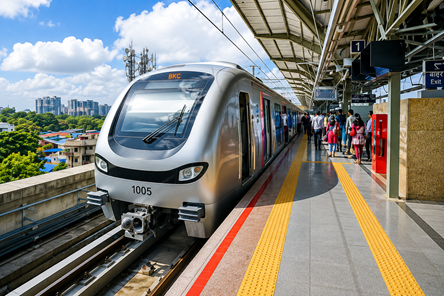
In parallel, the metro rail sector has expanded rapidly, crossing the 1,000 km operational mark and spreading beyond major metros into Tier 2 cities, fundamentally reshaping urban mobility. However, while network creation has been impressive, the sector is now entering a more mature phase where the focus must shift toward ridership realization, multimodal integration, operations and maintenance readiness, and long-term financial sustainability.
Overall, the growth trend is robust and credible, positioning rail as a backbone of India’s economic and urban development, with future success increasingly dependent on system optimization, lifecycle thinking, and integrated planning rather than sheer scale alone.
How is technology playing a major role in the ongoing modernisation of railway infrastructure in the country?
Technology is playing a transformative role in the modernization of India’s railway infrastructure by shifting the system from asset intensive operations to an integrated, safety driven, and data enabled mobility network. Indigenously developed ‘Kavach’, the national automatic train protection system for conventional trains, ETCS for high-speed and semi high-speed trains and CBTC for Metro systems, is significantly enhancing operational safety through automatic braking, overspeed control, and real-time integration with signalling and interlocking systems. On the freight side, Asia’s largest Operations Control Centre (OCC) for the Dedicated Freight Corridors enables centralized digital command of high capacity freight movement using advanced traffic management systems, SCADA, and real-time monitoring, fundamentally improving speed, reliability, and logistics efficiency. Indigenously developed Vande Bharat and Namo Bharat trainsets, which incorporate high acceleration, energy-efficient propulsion, onboard diagnostics, condition monitoring, and passenger-centric technologies, setting new benchmarks for semi high-speed rail. At the maintenance and asset lifecycle level, facilities such as the Sabarmati high-speed rail depot demonstrate the adoption of automated inspection, digital depot management, and condition-based maintenance inspired by global best practices. Complementing these with initiatives like development of high-speed trains, hydrogen-powered trains indigenously is making Railways in India a future-ready network.
How is the company supporting in the further development of railway infrastructure in the country?
Egis is actively supporting the further development of India’s railway infrastructure by combining its strong local presence with deep global expertise across metro, regional rail, high-speed and heavy rail systems. In India, Egis has been closely involved in several major metro rail projects, Mumbai Metro line 3, Kolkata Metro, Surat Metro, Delhi Metro, and Pune Metro to name a few, contributing to design review, systems integration, project management and operational readiness, while bringing global best practices in urban planning, multimodal integration and lifecycle optimization. The company played a key role in the Delhi-Meerut Regional Rapid Transit System (RRTS) project, where Egis was instrumental in finalization of various technical parameters of track and OHE design, schedule of maximum moving dimensions, vibration analysis, tunnel dimensions analysis along with detailed design for 16 km of viaducts. Drawing on decades of experience in railway rehabilitation and upgrade projects, Egis brings proven know-how in upgrading existing lines, enhancing speeds, improving ride quality, and strengthening safety without large-scale greenfield construction, operations, an expertise particularly relevant for India’s dense and operationally complex rail corridors. Globally, Egis has successfully delivered or supported several major high-speed rail projects in France/Europe, Morocco high-speed in Africa, few Chinese, Korean, Saudi Arabia and Thailand projects in Asia. Egis has also contributed significantly to heavy rail networks such as Hafeet Rail, Etihad Rail, and the Jordan Railway Network, and involved in landmark metro systems including Grand Paris Express, Dubai Metro, Doha Metro etc. This international experience is being systematically transferred to India to support forthcoming programmes under NHSRCL, RRTS expansion, metro expansions, and future Dedicated Freight Corridor lines, with a strong focus on systems engineering, safety assurance, project governance, and cost certainty. In the urban context, Egis also advocates fit for purpose and cost-effective solutions, such as light metro, LRT systems, etc. enabling cities to achieve capacity, accessibility, and sustainability outcomes without over engineering.
 What are the major challenges faced in the railway infrastructure developments and expansions across the country?
Railway infrastructure development in India faces a range of challenges that often originate well before construction begins. One of the most persistent issues is insufficient upfront planning, where projects move into execution before corridor alignment, land requirements, tie-up with Foreign Institutional funding agency and inter-agency constraints, like utility diversion challenges are fully understood and resolved. Across projects where Egis is involved, this challenge is addressed by investing significant effort at the planning and pre DPR stage, ensuring that demand forecasting, alignment selection, constructability, and lifecycle considerations are assessed holistically rather than sequentially.
Another critical challenge lies in ridership and traffic demand estimation, particularly for metro and regional rail systems, where optimism bias or limited datasets can result in either over designed or under-performing systems. Egis brings robust ridership modelling, multimodal integration analysis, and land use transport interaction expertise, drawn from its experience on major projects worldwide, to help clients identify the most appropriate system solutions.
Land acquisition and utility shifting remain among the most disruptive risks to project timelines. On major projects globally, Egis helps mitigate these risks by promoting a front-loaded strategy, where land plans, right of way requirements, and interface zones are frozen early, and statutory approvals and NOCs (railway, utility, environmental, and local authorities) are pursued well before the execution contractor is mobilised. By working closely with local bodies and state authorities, Egis advocates the use of GIS-based corridor mapping, enabling accurate identification of land parcels, underground utilities, encroachments, and environmental constraints.
A related challenge is fragmented coordination among stakeholders, including municipal bodies, utility owners, traffic authorities, and asset operators. Egis implements structured stakeholder management frameworks, supporting early consultations, consent acquisition, and clearly defined approval roadmaps. This proactive engagement significantly reduces downstream delays, interface conflicts, and contractual claims during execution.
The quality and robustness of Detailed Project Reports (DPRs) is another area where projects often struggle. Weak DPRs can lead to scope creep, cost escalation, and disputes. They must be strengthened by integrating systems engineering, constructability reviews, operations and maintenance considerations, risk registers, and realistic cost and schedule assessments, ensuring DPRs function as reliable decision-making instruments rather than mere approval documents.
Finally, the lack of standardisation across projects, whether in civil-system interfaces, or technical specifications, continues to affect cost efficiency and delivery timelines. Egis supports authorities in developing standard designs, reference architectures, and specification frameworks, enabling economies of scale, faster approvals, and more efficient asset maintenance over the full lifecycle.
 How do you look at the opportunities in high-speed rail infrastructure in India with more projects proposed?
India’s high-speed rail (HSR) programme represents a significant long-term opportunity, not only in terms of new lines but in reshaping how capacity, speed, and reliability are delivered across the rail network. With the Mumbai–Ahmedabad corridor establishing the technical and institutional foundation, the proposed expansion of multiple HSR corridors signals a clear shift from pilot implementation to a scalable national programme. The opportunity lies in moving beyond standalone projects toward a programme-based approach, where standardisation, localisation of technology, and strong systems engineering reduce costs and accelerate delivery across corridors. Equally important is the scope for knowledge transfer and indigenisation, enabling India to progressively build domestic capability in design, construction, operations, and maintenance. High-speed rail also creates opportunities to upgrade adjoining conventional networks through speed enhancement, capacity release, and multimodal integration, maximising overall network benefits rather than isolating HSR as a premium system.
What is your outlook on India’s railway infrastructure developments in the coming years?
India’s railway infrastructure outlook over the coming years remains strongly positive due to sustained capital investment and long-term programmes such as high-speed rail, dedicated freight corridors, semi high-speed corridors, and metro expansions. There is a growing use of digital technologies including digital twins, advanced signalling, data-driven asset management, and AI-enabled monitoring to improve planning accuracy, safety, and lifecycle performance. A critical shift needs to take place in the adoption of stronger upfront planning, where early stakeholder engagement, comprehensive land and utility mapping, and a more robust NOC-driven approval culture at the planning stage help minimise delays and claims during execution. Equally important is the increasing emphasis on professional project management during execution, with improved governance, risk management, interface coordination, and schedule control for complex, multi-agency projects. Together, better planning, digital enablement, and disciplined execution are positioning Indian railways to deliver projects faster, more predictably, and with higher long-term value supporting the emergence of a resilient, efficient, and globally competitive rail network over the next decade.
*As published in Construction Times News – May 2026


