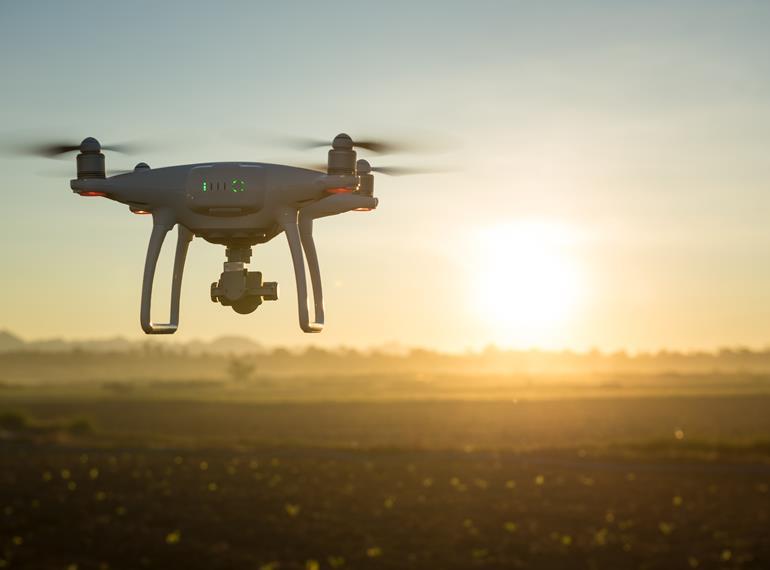
Five years on, Europe’s U‑space ambition remains largely theoretical. With only one operational airspace designated, are complexity and caution holding ANSPs back, or is it time to confront uncomfortable truths about demand, funding, and responsibility?
On 22 April 2026, the U-space regulation (Commission Implementing Regulation (EU) 2021/664) marked the 5th anniversary of its publication. Yet, despite ambitious expectations, at the time of writing, only one U-space airspace has been formally designated and is operational: San Salvo in Italy.
What is holding progress back? Is it the complexity of implementation, a lack of practical guidance, uncertainty over viability of the business models, or simply hesitation among stakeholders?
With more than 50 years supporting the aviation sector, Egis understands that safety sits at the core of all aviation activity, particularly for air navigation service providers (ANSPs). Any change of this magnitude must be assessed carefully against operational, technical, economic, and regulatory risks. For many ANSPs, U-space is not merely another regulatory requirement; it represents a structural shift in how airspace is managed, increasingly driven by digitalisation, automation, and new market actors.
What is U-space?
U-space is a European framework of digital services, regulations, and procedures designed to safely integrate high-density drone (UAS) traffic into low-level, urban, and complex airspace. Its objective is to enable automated, efficient, and secure drone operations while maintaining safe coordination with manned air traffic management (ATM). At its core, U-space enables the integration of manned and unmanned traffic through digitalisation and more dynamic use of airspace. One example is Dynamic Airspace Reconfiguration (DAR), which allows tactical restrictions on drone operations when manned aircraft need access to the same airspace.
The U-space concept emerged alongside developments such as the Aeronautical/ATM Data Service Provider (ADSP) model. Both aim to decouple services, promote interoperability, and distribute ATM data through SWIM-like infrastructures. U-space aligns with broader European objectives: an open and competitive market, data-driven services, and highly automated operations requiring minimal human intervention—even in environments with large volumes of UAS traffic.
Such an ecosystem inevitably requires new services and new actors.
Key roles and responsibilities
The regulation defines the U-space Service Provider (USSP) as a legal entity responsible for delivering U-space services to UAS operators. These services include, among others:
- network identification,
- geo-awareness,
- traffic information,
- UAS flight authorisation,
- conformance monitoring, and
- weather information.
Under Article 7(3), USSPs are required to establish arrangements with ANSPs to ensure appropriate coordination and the exchange of operational data. A USSP must be certified by the national regulator, or by EASA if it is a non-European entity.
Common Information Services (CIS) provide the digital backbone of each U-space airspace. CIS data must be made available to ANSPs1, USSPs, and UAS operators. According to Article 5(6), a Member State may designate a single CISP to provide these services on an exclusive basis within part or all of its U-space airspace. Like USSPs, CISPs must also be certified by the national regulator.
Although U-space service provision is intended to operate as a competitive market—allowing multiple certified USSPs to offer services within the same U-space airspace—the Member State remains central in designating where U-space is established and whether a single CISP is appointed.
Regulatory context
The U-space regulation places clear obligations on Member States. They are responsible for:
- establishing U-space airspace,
- designating service providers where applicable, and
- ensuring that the relevant services are available.
In practice, many Member States have chosen to designate their national ANSP as the single Common Information Services Provider (CISP). This designation significantly expands the ANSP’s role, requiring it to deliver digital information services that enable U-space operations. Even in Member States where no CISP has been designated, such as Switzerland or France, ANSPs remain closely involved due to their responsibilities for airspace management, coordination, and safety oversight.
The Regulation (EU) 2019/317, Article 25(3) explicitly states that revenues derived from en-route charges or terminal charges shall not be used to finance commercial activities of air navigation service providers. Since U-space falls outside the regulated services, this provision directly prohibits cross-subsidisation from airline charges into U-space infrastructure. We covered the issue of cross-subsidisation and early challenges of U-space in a previous blog.
Another thing to consider is that ANSPs cannot act independently. Under the regulation, U-space implementation must be initiated by the Member State, including the designation of service providers. Nevertheless, irrespective of the organisational model ultimately adopted, ANSPs will be affected by U-space. Those who prepare early are far better positioned to manage the transition than those who wait for formal instructions.
The current situation in Europe - a new approach?
The European Drone Strategy 2.0, published in November 2022, set out a bold vision for a user-driven and competitive drone ecosystem delivering economic, social, and security benefits. However, progress since then has fallen short of expectations.
The European Commission itself has expressed strong criticism, noting that the strategy “failed on multiple levels, including eVTOL2 and U-space.” According to European Commission, several factors have contributed to slow implementation, including:
- limited demand for operations that depend on U-space,
- delays in operational authorisations,
- the complexity of qualitative risk assessments, and
- broader national considerations affecting U-space designation.
Underlying these issues is a lack of sustained funding for research, innovation, market development, and infrastructure. This is particularly evident in the VTOL sector, where certification and development costs are estimated at €1–2 billion. In response, the European Commission has launched a study to review progress under Drone Strategy 2.0 and consider a potential reprioritisation of its flagship actions.
Challenges ANSPs need to anticipate
U-space represents a fundamental shift in how low-level airspace is managed. While it promotes digitalisation, automation, and open market principles, from an ATM perspective, it is highly disruptive. Key challenges include:
- complex data exchange requirements and new communication interfaces,
- integration of safety nets across manned and unmanned operations,
- impacts on the CNS toolkit, and
- implications for overall airspace architecture.
Another major challenge is uncertainty. No Member State has yet implemented a fully operational U-space with all mandated services. Open questions remain around system architecture, sustainable business models, and long-term economic viability. A lack of historical traffic data further complicates planning and cost benefit assessments.
Studies such as EUROCONTROL’s ACUTE and the SkeyDrone Drone Detection Report indicate that, in many cases, the number of daily flights is at levels comparable to the monthly figures reported by CAAs issuing approvals for EASA specific category operations. Which figures should be used for planning purposes? The CAA figures underrepresent the number of drone flights taking place as a whole, although not all of them will be subject to U-space regulations. This uncertainty makes it difficult for stakeholders to quantify the benefits of investing in U-space today.
Where should ANSPs start?
The first step is developing a solid understanding of how U-space fits into the existing ATM ecosystem. This includes a clear view of stakeholder roles, responsibilities, and regulatory obligations. The regulation allows for several organisational models, including configurations without a designated CISP. In reality, models are likely to differ across Europe depending on national priorities and the level of ANSP involvement.
Each model presents distinct opportunities and risks. These must be assessed carefully before any commitments are made.
A typical implementation scenario, currently seen in projects such as Antwerp CTR, includes a single U-space airspace within controlled airspace, one designated CISP, and one USSP. In this model, data and communication flows between stakeholders clearly define responsibilities, while DAR3 enables manned aircraft to transit U-space airspace through tactical restrictions on drone operations.
From a financial perspective, USSPs charge UAS operators for service provision, while the CISP recovers its costs from USSPs through regulated fees, typically based on full cost recovery plus an approved margin.
At Egis, we have developed a structured approach to help ANSPs initiate their U-space journey:
1. Regulatory understanding: Analyse the regulation in detail, with particular emphasis on acceptable means of compliance.
2. Organisational models: Assess alternative models aligned with Member State and ANSP preferences.
3. Traffic and economic assessment: Where possible, conduct traffic forecasts and cost benefit analyses to evaluate costs, benefits, and return on investment.
4. Implementation support: Build on proven experience to support strategic management, system definition, organisational adaptation, and regulatory compliance.
While actual implementation costs vary widely by country, organisation, and timing, we have identified the main CAPEX and OPEX cost drivers for CISP and USSP roles. With credible traffic forecasts, it becomes possible to model different charging schemes and understand their impact on financial sustainability.
Conclusion
U-space implementation is undeniably complex, and ANSPs are right to recognise the risks involved. Designating and delivering U-space requires coordinated action across organisational structures, business models, regulatory compliance, operational procedures, technical systems, interfaces, and staff competencies.
However, complexity becomes manageable when broken down into clear, sequential steps. Egis has already supported several European ANSPs in kick starting their U-space activities, regardless of their initial level of maturity. Crucially, much of this preparatory work can be completed before any formal delegation of responsibilities or designation as a CISP or USSP.
If you are interested in discussing U-space implementation and its implications for your organisation, please contact us at communications.aviation@egis group.com.
1ANSPs are involved only if U-space is designated in a controlled airspace or if the ANSP wishes to have information on adjacent UAS traffic for ATCO awareness.
2Two leading European VTOL companies, Volocopter and Lilium, entered insolvency and were subsequently sold for €11 m and €18 m respectively.
3In uncontrolled airspace, the DAR mechanism does not exist and the segregation between manned and unmanned traffic is ensured through the electronic conspicuity of manned aircraft to U-space surveillance systems.