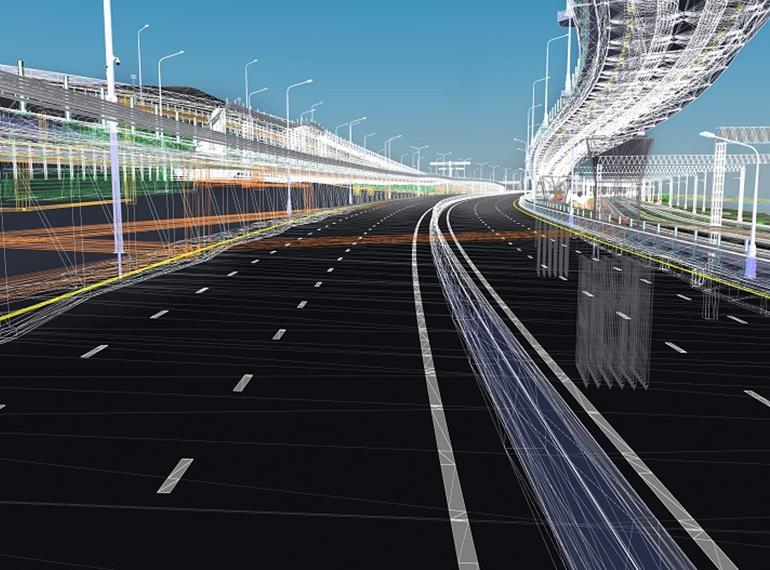
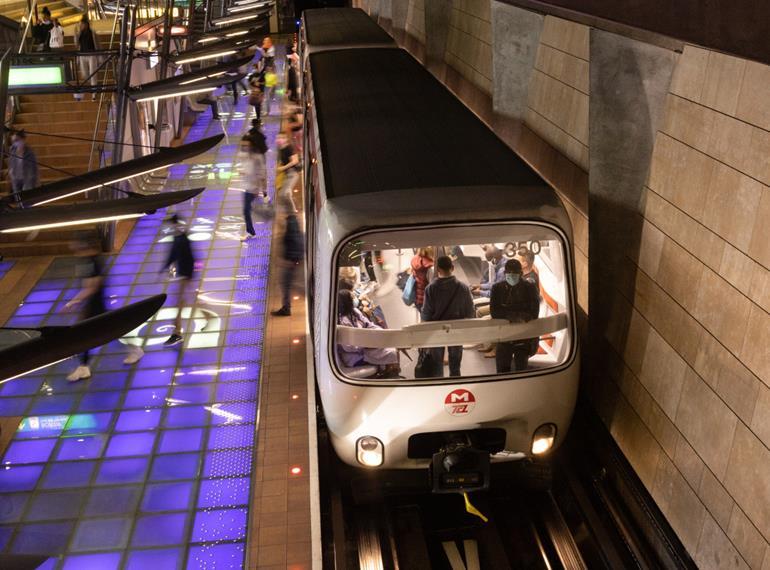
Canadian provinces are significantly increasing investments in modernizing their transportation networks, particularly in major metropolitan areas such as Toronto, Montreal, and Vancouver. Aging infrastructure combined with population growth is making smarter asset management essential. These large-scale projects require a level of documentation accuracy and operational control that only BIM and digital twins in infrastructure can provide.
Optimizing large-scale mobility projects
In Ontario, major transit initiatives including GO Transit expansion programs with Metrolinx and large-scale LRT developments are increasingly relying on BIM modeling to coordinate design and construction activities, manage complex interfaces, and anticipate risks.
Beyond public transit, airport infrastructure projects such as those delivered for the Greater Toronto Airports Authority (GTAA) at Toronto Pearson International have set a high benchmark for digital delivery infrastructure, demonstrating how advanced BIM and VDC practices can enhance coordination, transparency, and lifecycle performance.
The future integration of digital twins will enable more efficient operations, support load and demand simulations, real-time performance monitoring, and improve maintenance planning.
In Quebec, the Réseau express métropolitain (REM) is a strong example of the value of an integrated digital approach. BIM was used during implementation to detect and prevent construction conflicts, and digital tools were deployed on ventilation and traction control systems to collect, analyze, visualize, and remotely control processes while improving interface management between infrastructure and electromechanical systems.
In the long term, a comprehensive digital twin has strong potential across Quebec, where many transportation projects are currently at the assessment stage. It could provide real-time visibility into network conditions, enhance incident management, and optimize energy consumption.
Smart management of road networks
In Alberta, where distances and extreme weather conditions pose significant challenges, digital twins represent a major opportunity to monitor road conditions, anticipate asset deterioration, and optimize maintenance operations. The combined use of IoT data, BIM models, and predictive analytics could reduce maintenance costs while improving road safety.
Modernizing urban transportation networks
In British Columbia, SkyTrain modernization projects and investments in active transportation infrastructure align with a broader smart city strategy. On the Canada Line, a digital twin has been developed to optimize asset management and maintenance using real-time data, allowing operators to visualize, monitor, and predict maintenance needs for track and infrastructure assets.
The use of digital twins for rail and transit can also help better understand passenger flows, adjust service frequencies in real time, and simulate the impact of new stations on smart mobility.