Introducing CBTC on an existing metro line
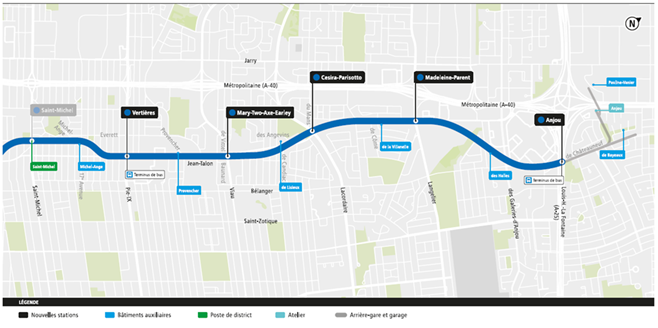
Opened in 1966, the Montreal Metro is Canada's busiest urban rail network and the third busiest in North America, behind New York and Mexico. Long anticipated by local communities, the Blue Line extension is one of the 4 lines of the Montreal’s urban rail network and will significantly improve mobility and public transit connectivity in eastern Montreal.
The project includes the construction of five new stations, the simultaneous management of 15 major construction sites, including extensive excavation work and new operational infrastructure. It also involves deploying a new CBTC signalling system across both the existing and extended sections of the Blue Line. This technology will play a fundamental role in the future operation and long-term performance of the network.
What is CBTC?
Communications-Based Train Control (CBTC) is an advanced railway signalling system that enables continuous, secure communication between trains and the control centre. By providing precise train positioning and real-time speed adjustments, CBTC can increase line capacity while improving operational performance, reliability and the passenger experience.
Benefits of the CBTC technology:
- Reduced headways between trains,
- Increased service frequency and network capacity,
- Greater operational flexibility,
- Improve punctuality and reliability,
- Enhanced passenger experience
CBTC deployment
The new system will continuously monitor train positions and manage rail traffic in real time across the Blue Line. By enhancing reliability, safety and service quality, CBTC will support a more resilient and efficient Montreal metro network.
The technology will be integrated throughout the infrastructure, including tracks, tunnels, technical facilities and rolling stock. Once operational, CBTC is expected to help maintain a metro service delivery rate of 99.9%, reduce operational risks, and modernize the entire line with state-of-the-art control systems.
CBTC integration will also give STM greater flexibility to optimize service according to passenger demand, while supporting the network’s long-term sustainability and improving operational efficiency.
Key technical challenges:
- Conducting a comprehensive assessment of the existing network.
- Analyze existing infrastructure and identifying modernization requirements and interfaces with new infrastructure
- Coordinating interactions between existing and new assets, including electrical, mechanical, and signalling systems, and new equipment.
- Maintaining daily metro operations on the existing line while carrying installation works at night, without disrupting passenger service.
Egis Canada’s mandate:
As part of the Blue Line extension project, Egis Canada provides:
- Professional engineering services covering energy systems, RAMS (Reliability, Availability, Maintainability and Safety), signalling and track systems
- Technical support throughout procurement and delivery phases
- CBTC strategy implementation and systems integration expertise
- Energy management and efficiency solutions
- Independent systems review services for STM teams
In close collaboration with STM and GPLB partners, Egis contributes to rail systems integration engineering and implementation strategy, covering installation planning, deployment, site access, operational constraints and multidisciplinary coordination.
As a recognized leader in metro automation in France and railway systems engineering worldwide, Egis brings extensive experience in railway control and signalling systems to support the successful delivery of this transformative project.